SLAs, scope creep and the Australian agency contract
The useful clauses are dull — IP, termination, media liability, a change process that can survive a steering group. An SLA that promises “excellence” is decoration.
By DMA Editorial · DMA Australia · 24 June 2026
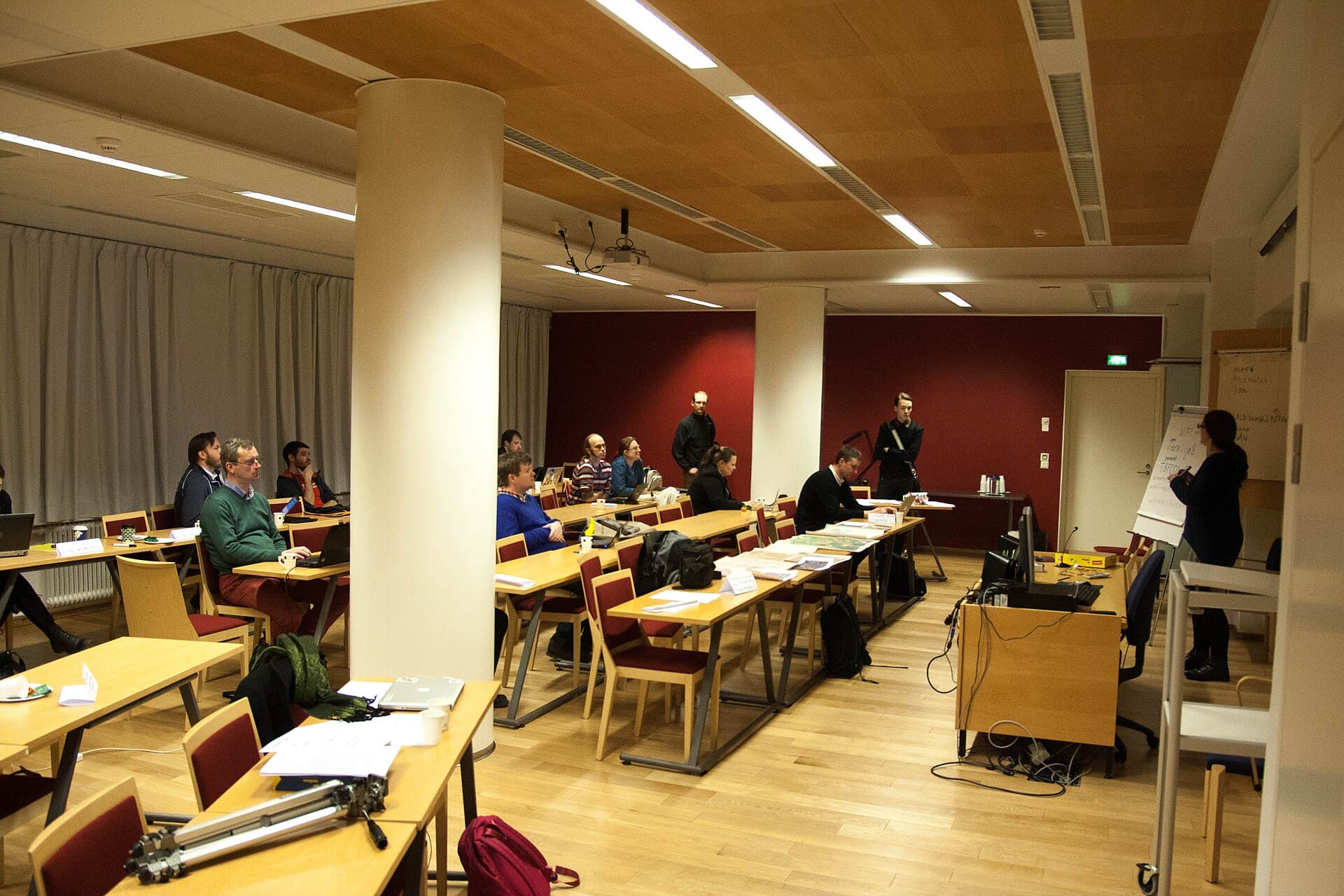
Image: Anohel · CC BY-SA 3.0. See all image credits.

Australian agency contracts are often a template, a statement of work, and a slide that says “partnership”. The template was written for a different job. The statement of work is a calendar. The useful paper is shorter: what is in, what is out, who owns the files, how you leave, and who is on the hook when the media or the claim goes wrong.
This is a working together piece for people who still have leverage — before the kick-off, or at a renewal. If you are already past manners, read when and how to fire your agency in parallel. Exits are easier when the clauses were written by someone who imagined one.
An SLA is not a feeling
Service levels exist to make disappointment specific. That is a kindness. A clause that promises “best endeavours”, “category-leading work” or “a growth mindset” is not a service level. It is a tone of voice.
Write things a third person could inspect. How quickly the shop will acknowledge a request that is actually in scope. When the monthly arrives, and in what form. How many named people will attend the weekly, and what happens when they are on leave. How long creative sits with you before the date moves. How incidents are raised — a tracking break, a live claim that legal has withdrawn, a platform ban.
Do not write a service level on revenue or on a platform return figure. Those numbers move for reasons the shop does not control, and for reasons the shop can quietly redefine. This desk will not bless a contractual ROAS. If you want a kicker, put it in the fee model and make it auditable.
Remedies should be proportionate. A service credit on a late report can be sane. A right to terminate for one late report is how you employ lawyers to perform a mood. Escalation paths — who you call when the account lead is the problem — are more useful than penalties nobody will invoice.
Scope creep is unpriced work with a smile
Creep is not a mystery. It is a new request that did not travel through the change process, usually because someone said “quick one” in Slack.
The fix is not a thicker statement of work. It is a boundary and a trade. What is in this month. What is out. What happens when you add a campaign: more money, longer dates, or something dropped. A shop that cannot drop work will either go quiet or send a surprise variation. A client that cannot drop work will call every variation hostile.
Write the intake. Who on the client side is allowed to brief. A steering group of eight is not an intake. It is a choir. Write the size of a “quick one”. A caption is not a landing page. A landing page is not a site. A site is not a brand system.
Write the pause. If you cannot supply assets, approvals or a decision, the clock stops. Australian projects die on the client diary as often as they die on the shop floor. A contract that only penalises the agency will train the agency to pad.
If the commercial model is a cheap monthly, creep is inevitable. What Australian agencies actually charge is the companion piece. A $4,000 retainer cannot absorb an unplanned shoot, a legal rewrite and a new market. Pretending it can is how both sides start lying.
Intellectual property: assume nothing
Marketers often believe that paying the invoice buys the files. Australian contracts do not always say that. Some assign the work product on payment. Some licence it for a term. Some keep the underlying tools, templates and “pre-existing IP” — which can be reasonable — and then define those so broadly that the usable files never quite leave.
Say what you need on the day you leave. Native design files, not a flattened PDF. The latest approved copy. The raw film if you paid for a shoot. The component library if you paid for a site. The ad account objects if you paid for media. Assign or licence those, in writing, for the uses you actually have: paid media, packaging, franchisees, a future shop.
Do not demand ownership of the agency’s whole method. You did not buy their workshop format or their reporting template. Demanding it delays the clause you do need.
Moral rights and third-party assets need a line. Stock, fonts, music, a photographer’s licence, a creator’s usage — these are often narrower than the campaign they sat in. If the shop cannot list the third-party licences, you will meet them again at the worst time.
Confidentiality should run both ways. You have customer data and unreleased product. They have other clients and a way of working. Mutual, specific, and not a gag on the fact that you were a client.
Termination that you can use
Convenience and cause are different doors. Convenience is a date and a notice — thirty, sixty, ninety days, whatever you actually agreed. Cause is a process: a written notice, a chance to remedy, then an exit. Do not write cause so wide that a late slide is a breach. Do not write it so narrow that disappearing for a month is a style.
Auto-renewal should be visible in a calendar, not only in a PDF. Plenty of Australian retainers roll because a date passed in silence. Put the date in the same place you put the monthly.
Work in flight needs a rule. Media that cannot be cancelled. Production that is half shot. A developer mid-sprint. Pay for what you stop, or stop before you start. Ambiguity here is how final invoices become folklore.
For the operational sequence of an exit — keys, manners, the smallness of the industry — use the firing guide. The contract should make that sequence possible. It cannot perform it for you.
Media liability, claims, and who is on the hook
Someone will be wrong in public. A claim the category has always made. An ad that served in the wrong placement. A pixel on a page it should not have been on. A creator who did not disclose. Write who is responsible for what, before the letter arrives.
The client usually owns the product, the price, the legal lines they signed, and the decision to run. The agency usually owns the craft of the placement, the failure to follow a written restriction, and the admin of the accounts they control. Platforms own the platform. A clause that tries to make the shop the insurer of the whole brand is not serious. A clause that tries to make the client the insurer of the shop’s sloppiness is not either.
Insurance should be named. Professional indemnity and public liability, at levels that match the spend and the category. Ask for certificates if the work is large or regulated. Do not ask for theatre on a $5,000 content monthly.
Indemnities should be readable. If you cannot explain the clause to a colleague in a minute, it will not help you in a week. Cap the liability at something related to the fees, with the usual carve-outs for genuine misconduct and IP infringement. Unlimited liability on a mid-sized independent is how you get a shop that cannot take the work, or a shop that is not reading its own paper.
Consumer law and advertising codes still apply no matter how neat the indemnity. You cannot contract out of a misleading claim.
The brief is part of the contract, or it should be
Attach the brief. Attach the measurement truce. Attach the named pod if you were promised one. A statement of work that says “digital marketing services as agreed from time to time” is a subscription to an argument.
If you have not written the brief yet, stop negotiating clauses and go back to writing a brief agencies will actually read. Paper cannot rescue a cloud.
Unfair contract terms under the Australian Consumer Law are not only a consumer story. Standard-form agreements with small businesses have been under a harder light for years. If you are the larger party sending a template, read it as if a regulator might. If you are the smaller party receiving a template, do not initial a clause you could not explain.
What to do in the room with the paper
Sit marketing, finance and whoever owns risk in the same hour. Split reading produces split contracts.
Mark the five clauses that will matter when you are tired: scope and change, IP and materials, termination, media and claims, data. Data has its own piece on this desk. Do not let it be a sentence that says “comply with privacy law”.
Ask the shop which clause they have actually used. The pause is informative. Shops that have never terminated a client, retrieved a file or argued a claim are either lucky or new.
Do not trade a serious clause for a discount on month one. Month one is theatre. The clause is the year.
The desk’s view
Write an SLA you can inspect, a scope you can trade, and an exit you can perform. Own the work product. Licence the rest. Put media and claims in sentences a human can read. The word partnership can stay in the deck. It does not belong in a clause that has to work on a Friday.
Questions marketers actually ask
- What should an Australian agency SLA actually measure?
- Things a human can inspect — response times, reporting dates, named people in the weekly, a change process. Not “growth” and not a platform ROAS the shop can retune.
- Who owns the intellectual property in agency work?
- Whatever the contract says. Default assumptions are how brands discover, at exit, that the files live in someone else’s workspace. Assign the work product. Do not pretend you bought the shop’s whole method.
- How do we stop scope creep without being difficult?
- Write what is in, what is out, and how a new request becomes a variation or a trade. Creep is unpriced work. A change process is manners, not hostility.