Hobart and Tasmania digital agencies: a small market and when to stay local
Tasmania is a small pond with a sharp visitor economy and produce brands that sell far beyond the island. A local shop knows the texture. A mainland retainer knows the tooling. The brief should say which problem you actually have.
By DMA Editorial · DMA Australia · 2 April 2026
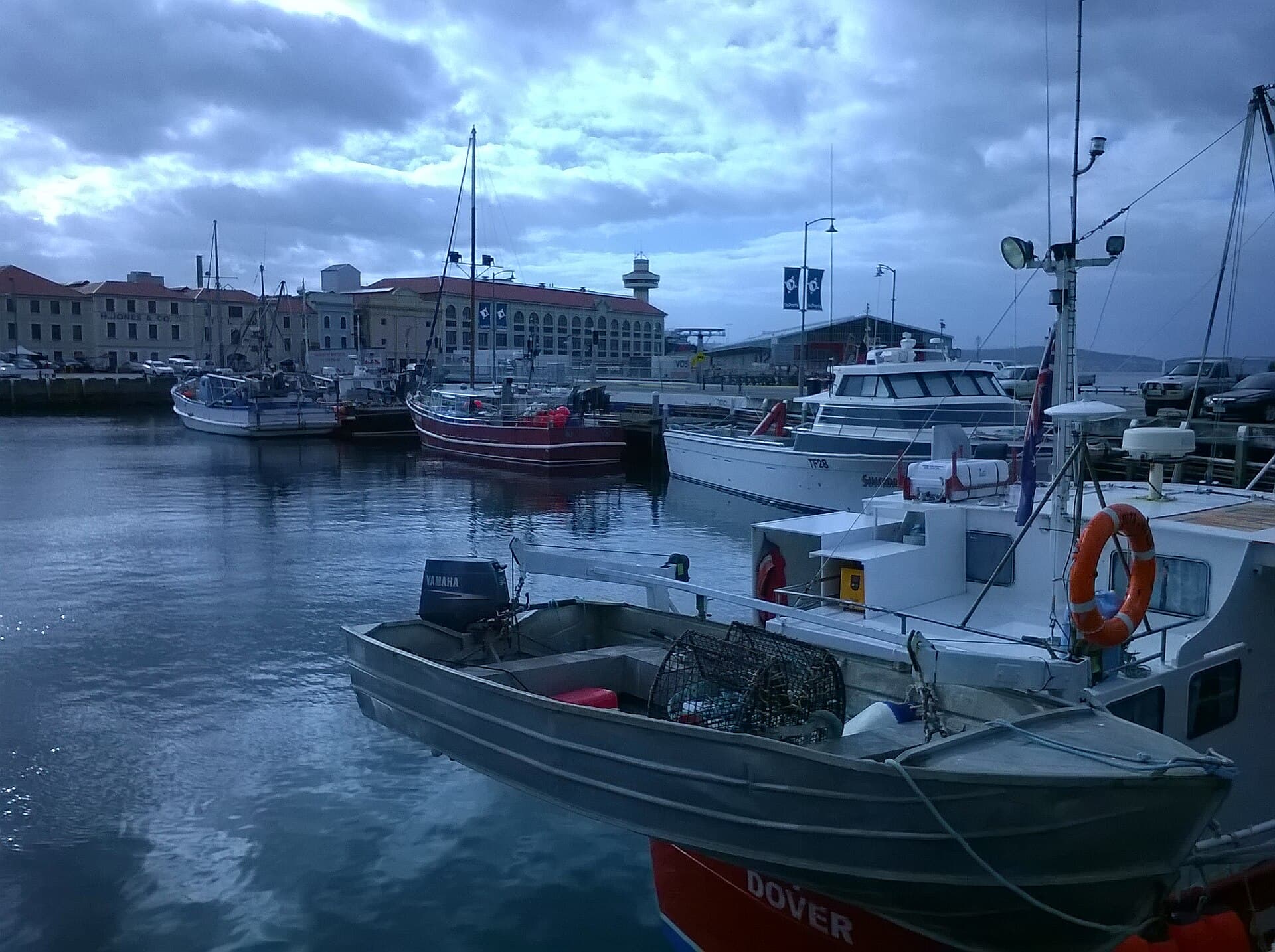
Image: Lautreca11 · CC BY-SA 4.0. See all image credits.

Tasmania is the smallest capital-city agency market we cover, and the one where a directory would fail fastest. There are not enough shops to rank, and everyone already knows who sits where. What a buyer needs is a way to decide between a Hobart or Launceston room that understands the island, and a mainland retainer that understands scale. Those are different jobs. They are often sold as the same conversation.
The public facts are simple. Tourism and the visitor economy still carry a lot of the marketing labour. Produce brands — wine, whisky, salmon, cherries, dairy, the finer edges of food and drink — sell a Tasmania that has to be true when a customer finally gets off the Spirit or the plane. Arts, science and a compact state government sit beside that. Canberra is the other small-capital comparison for government manners; Hobart’s version is closer to the ground and harder to bluff. Our city scenes desk treats that compactness as a feature, not as a reason to write a cute list.
A small pond with a long shoreline
Hobart holds most of the agency and freelance benches: Salamanca and the waterfront for the visitor-facing work, the inner suburbs and the northern shore for rooms that do not need to be seen. Launceston is a second node, closer to northern produce, manufacturing and a different visitor pattern. The north-west and the east coast generate briefs that often land in one of those two rooms, or go straight to a mainland shop that has never driven the road.
In a market this size, reputation is a form of infrastructure. A bad job is not forgotten. A good one is remembered as a person, not a brand. That makes chemistry easier and honesty cheaper. It also makes a theatrical pitch slightly ridiculous. You are not discovering a hidden shop in a warehouse. You are choosing among people who already share a supermarket.
Capacity is the constraint the pitch will underplay. A six-person studio can be excellent and still be one parental leave away from a problem. A two-person practice can be the best writers on the island and still be the wrong hire for a six-month always-on media program. Small is not a quality score. It is a staffing plan. Ask what they do when two retainers peak in the same month. Ask who they already say no to.
The freelance bench is part of the market. Editors, photographers, producers and strategists move between in-house tourism roles, produce brands and the shops. That is healthy. It also means a proposal can look bigger than the payroll. Ask who is employed and who is a regular contractor. Neither is a sin. Surprise is.
Tourism and produce are not a mood
Tasmania’s visitor economy is a real industry with seasonality, yield problems, trade relationships and a destination brand that every operator wants to borrow. A local shop that has lived through a slow winter and a booked-out summer will not write “always on” as if the island had Sydney’s demand. It will talk about shoulder seasons, about the difference between a cruise day and a self-drive week, and about the mainland customer who has already decided Tasmania is a personality.
That knowledge is worth paying for when the work is a destination, an experience, a regional operator, or a produce brand whose story dies if it is written as a lifestyle overlay. It is less decisive when the work is a national paid-media machine or a technical SEO program. Those jobs need tooling, depth and hours. The island can supply some of that. It cannot always supply all of it.
Produce brands have a second audience: the buyer in Melbourne, Sydney or Brisbane who will never see the paddock. The work has to travel. A Hobart shop that only writes for people who already love the island will under-explain. A mainland shop that has been here twice will over-explain and get the facts slightly wrong. The brief should say where the customer stands. If you sell in Melbourne hospitality and also at the farm gate, say both.
Government work in Tasmania, as in other small jurisdictions, is document-heavy and relationship-heavy. Accessibility, records, and a stakeholder map that includes people who will never click the ad all take time. A local shop that has done it will price the patience. A mainland shop that treats it as a smaller version of a federal brief will miss the room. If you are actually buying federal manners, you may want Canberra experience. Do not assume Hobart and Canberra are the same smallness. One is an island economy. The other is a company town for government.
When a local shop is the right hire
Hire locally when proximity is part of the work. Site visits that are not a performance. Relationships with operators, venues, producers and the public-sector people who can stop a campaign. A tone that does not sound like a mainland copywriter on a long weekend. A meeting you can have this week without a flight.
Hire locally when the brief is story-led and the media is modest. Content, partnerships, a site that tells the truth, a social retainer that is not pretending to be a performance engine — these are jobs a good Tasmanian shop can run with more senior time than you would get from a junior team in a mainland network office.
Hire locally when you want someone who will still be here in three years. Mainland retainers get reorganised. The island bench moves, but it moves around the same harbour.
When a mainland retainer is the right hire
Hire mainland when the job exceeds the bench. Large paid-media programs, a messy marketing-technology stack, a national retail calendar, a brand system that has to live in six states — these are capacity and specialism problems. Paying a Melbourne or Sydney shop for them can be rational. Paying them to write Tasmania as a mood is not.
Hire mainland when your customer and your sales team already live there. A produce brand whose real fight is a buyer in a national retailer may need a shop that can be in that room. A tourism operator whose media is almost all spent on the mainland may want the people who sit next to those media reps. Distance cuts both ways.
Be honest about the cost. Mainland fees are higher, and a slice of them is overhead. What Australian agencies actually charge sets out the bands. A Tasmanian buyer should ask what senior hours those bands buy after the Bass Strait premium. If the answer is a junior team and a quarterly visit, you are funding someone else’s office.
The split that sometimes works
A local studio on story and relationships, a mainland shop on media or SEO, is a common and respectable model. It fails when nobody owns the join. Someone has to hold the brief, the calendar and the right to say that a national line does not work on the island. Put that person in the contract. If you cannot name them, you do not have a model. You have two invoices.
The other split is in-house plus a specialist. Tasmania has enough marketers inside tourism, produce and government that a full-service retainer can be an expensive way to buy a gap. Write the gap. How to choose a digital marketing agency in Australia applies on an island as much as on a harbour. The island addendum is that you cannot pretend there are twelve other shops if this one goes badly. Behave accordingly.
How a Tasmanian buyer should run the conversation
Write a brief that would make sense to someone who has never been here, then add the facts only a local would know. Name the season. Name the channel you already over-use. Name the mainland stakeholder who thinks they understand Tasmania because they have a favourite restaurant.
Invite two or three rooms, not a festival. Pay for thinking if you want thinking. In a small pond, an unpaid pitch is also a public one.
Ask the mainland shops when they were last here for work, not for a conference. Ask the local shops who they phone when the job gets bigger than the room. Ask both how they would explain the brand to a customer who thinks Tasmania is a long weekend. If they cannot do that without a paddock metaphor, keep looking.
If you have a point of view from the island side of the work — operator, in-house, or a shop that wants to argue in public — the desk takes pitches. We will not run a disguised service page. We will run an argument that a buyer can use.
What Tasmania is not
Tasmania is not a boutique version of the mainland. It is a small economy with a sharp visitor story and brands that have to travel further than the ferry. The right hire is the one that can live with that distance without turning it into a postcard. Everything else is a waterfront with a website.
Questions marketers actually ask
- When should a Tasmanian brand hire a local agency instead of a mainland one?
- Stay local when the work depends on destination knowledge, producer relationships, state-government manners or the ability to be on site this week. Hire mainland when you need specialist depth — heavy paid media, technical SEO, a national brand system — that the island bench cannot staff. Split the work if you can name who owns the join.
- Is the Tasmanian agency market too small for a proper pitch?
- It is too small for a twelve-shop beauty parade. It is not too small for a written brief, two or three conversations, and a paid diagnostic. In a small pond, a theatrical pitch just tells everyone your budget and wastes the people you may later need.
- Can a Hobart shop handle a brand that sells nationally?
- Yes, if the job is story, content, partnerships and a modest media plan. Be more cautious if you need large-scale performance, a complex stack or a retail network on the mainland. Ask what they already do off-island, and who they call when the work exceeds the room.